

A gift from your parents can be separate property in a Texas divorce. Proving that is often the harder part.
Under Texas law, property a spouse receives by gift during the marriage is that spouse’s separate property. That’s true of a down payment your parents gave to you alone, and of one they gave to both of you. If it went to both of you, each spouse’s share is that spouse’s own separate property. It doesn’t become community property, and a divorce judge can’t award your separate property to your spouse.
The catch is that once the money went into a house, Texas presumes the house is community property. To prove that the gift remains separate property, you need clear and convincing evidence, and the lender’s gift letter is only one piece of that proof.
How Texas Treats Money Your Parents Gave Toward the House
The rule starts in the Texas Constitution, Article XVI, Section 15, which makes property a spouse acquires during marriage by gift, devise, or descent the separate property of that spouse. Texas Family Code Section 3.001 says the same thing. Here’s how three setups compare:
| Gift to you alone | Gift to both of you | Loan from your parents | |
|---|---|---|---|
| Who owns the money | You | Each of you owns a share | You borrowed it, and your parents expect repayment |
| Character in a divorce | Your separate property | Each share is that spouse’s separate property | Not a gift, so the gift rule doesn’t make it separate |
| What decides it | Proof of a gift to you, traced into the house | Proof of a gift to both of you, traced into the house | No gift to prove, and the community presumption applies to what the money bought |
A Gift to You Alone
If your parents gave the money to you and only you, the gift is your separate property. Your spouse has no ownership claim to the gift itself, even though the rest of the house may still be community property.
A Gift to Both of You
A gift to a married couple doesn’t turn into community property. Each of you receives your share by gift, and each share is that spouse’s separate property.
The San Antonio court of appeals, which hears appeals from Bexar County, dealt with a gift to both spouses in Garcia v. Mascorro, a 2023 memorandum opinion. A husband’s mother had deeded two lots by gift deed to her “beloved son and daughter-in-law.” The court called it undisputed that the lots were both spouses’ separate property, held that the home built on them during the marriage was separate property too, and sent the property division back to the trial court because a court can’t divest a spouse of separate property.
The difference matters when the court divides property. Community property can be divided by the court in a manner the court considers “just and right” under Section 7.001, and that division does not have to be 50/50. Separate property cannot be awarded to the other spouse. In a San Antonio property division case, the court decides what is community property and what is separate property before it divides anything.
Why Texas Presumes the House Is Community Property
Under Texas Family Code Section 3.003, property either spouse has when the marriage ends is presumed to be community property. The spouse claiming separate property has to overcome that presumption by clear and convincing evidence, which the Family Code defines as proof that produces “a firm belief or conviction” in the mind of the judge or jury deciding the facts.
That’s a higher bar than “more likely than not.” Texas appellate courts have held that testimony that property was bought with separate funds, without tracing the funds, isn’t enough on its own. Simply testifying that your parents gave you the money usually is not enough. You also need records showing where the money came from and where it went.
The gift is separate property by law. It stays separate in your divorce only if you can prove it.
What the Gift Letter Proves, and What It Doesn’t
The documents your parents sign and the way the gift is documented at closing matter. The gift letter, which some people call a gift affidavit, is evidence of what your parents intended, written at the time they gave the money. It isn’t the only evidence a court considers.
What Lenders Require It to Say
The gift letter was written for the lender. Under Fannie Mae’s Selling Guide rules on personal gifts, the letter has to state the actual or maximum dollar amount, include the donor’s statement that no repayment is expected, and give the donor’s name, address, phone number, and relationship to the borrower. Your lender may use its own form, and other loan programs set their own requirements.
Nothing in that list asks whether the money is meant for one spouse or both, or whether it’s meant to stay one spouse’s separate property. Those requirements serve the loan approval, documenting that the money isn’t a hidden loan. They weren’t written to answer the question a divorce court asks.
What a Court Looks At
To prove a gift in Texas, the person claiming it has to show three things: the donor intended a gift, the property was delivered, and it was accepted. Courts judge donative intent, meaning the intent to give, as of the time the gift was made.
A gift letter can help show that your parents intended the money as a gift and who they intended to receive it. A judge weighs it with everything else: your parents’ testimony, bank records, the closing documents, and the deed. But other documents can undermine that argument. In a 2023 Texarkana appeals decision, a husband’s parents testified they meant land they deeded to him as a gift, like an early inheritance. The deed recited that it was conveyed “for the consideration,” the court held that testimony couldn’t contradict that recital, and the land was treated as community property.
What Happens to the Down Payment Once It’s in the House
When a down payment covers part of the price and a mortgage covers the rest, Texas uses the “inception of title” rule to determine whether an ownership interest is separate or community property. Under that rule, a property’s character is fixed when the right to own it first arises. For a house you buy during the marriage, that’s generally the purchase.
A House Can Be Part Separate Property and Part Community Property
When property is bought partly with one spouse’s separate funds and partly on community credit, the Texas Supreme Court has held that the property is part separate property and part community property, held as tenants in common, in proportion to what each contributed. The key cases are Cockerham v. Cockerham and the earlier Gleich v. Bongio decision it relied on.

So a separate-property down payment can give the spouse who received it an ownership share in the house itself. That share is a fraction of the property, not just a dollar amount to be paid back, and working it out takes the purchase price, the down payment, and the loan figures from closing.
When the Claim Is Reimbursement Instead
Using separate-property money on a house does not always create a separate ownership interest in the house. If separate-property money went into the house later, like paying down the mortgage or paying for a remodel, the claim may be for reimbursement. Under Section 3.402, a reimbursement claim exists when property of one marital estate is used to benefit another estate in a way that would unjustly enrich it if not repaid.
A reimbursement claim doesn’t create an ownership interest in the house. The judge decides whether reimbursement is appropriate based on the circumstances. If the court approves a reimbursement claim, it can secure the claim with an equitable lien on the property.
Tracing the Money From Your Parents to the Closing Table
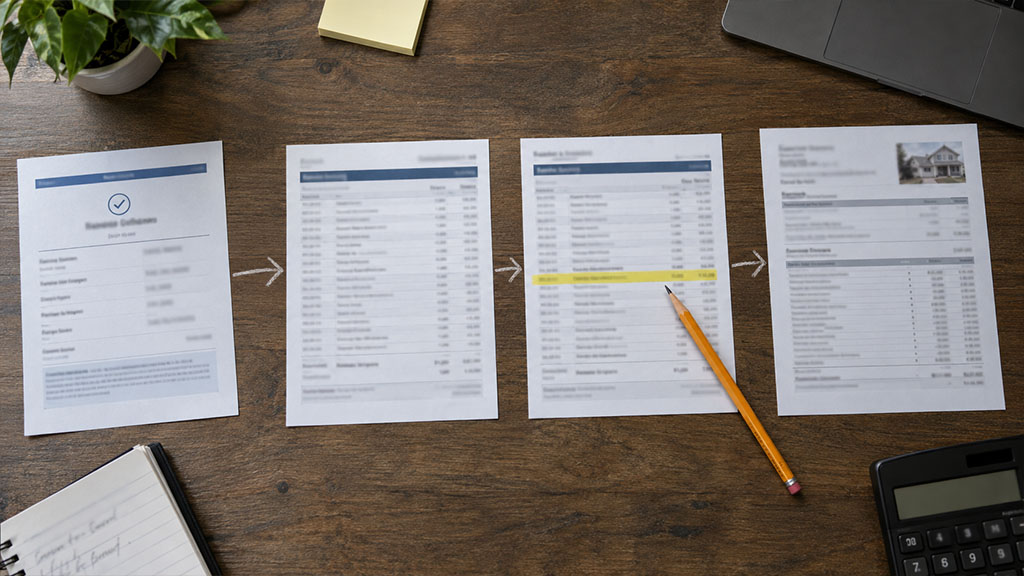
Tracing means showing, with records, where the money came from and where it went. Start gathering:
- The gift letter. Your copy, or the lender’s copy from the loan file.
- Your parents’ bank or wire records. They show the money leaving their account, the amount, and the date.
- The receiving account. Statements show whose name was on it and what else was in it.
- The closing statement. It shows the price, the funds brought to closing, and the loan amount.
- The deed. It shows who took title and what the deed recites.
Keeping good records is also a key part of protecting your assets before a Texas divorce, long before anyone files.
Gift or Loan: Be Honest About Which One It Was
A gift is a voluntary transfer made without consideration, meaning nothing is expected in return. If your parents expect to be paid back, the money was a loan, and the separate-property rule for gifts doesn’t cover it.
That creates two problems. A house bought with borrowed money during the marriage is subject to the same presumption that it is community property, and there’s no gift to trace. And a gift letter states that no repayment is expected, so if the family deal was really a loan, the letter says something different from what everyone agreed. Don’t sign a gift letter for money you’re expected to repay.
Buying With Family Money Now? Get It Right at Closing
You can create the proof now instead of trying to reconstruct it years later. If you have not closed yet, make sure the gift letter clearly states who is receiving the money and what the gift is for.
- Name the recipient. If the gift is meant for one spouse, the letter should name that spouse.
- State the purpose. Say the money is a gift toward the down payment on this property.
- Avoid unnecessary transfers between accounts. The fewer accounts the money passes through, the easier it is to trace later.
- Keep copies you control. Store the gift letter, transfer records, closing statement, and deed.
Parents giving a large gift are also making an estate planning decision. Our estate planning attorneys in San Antonio can help families decide how to structure that gift before the money moves.
FAQs about Family Down Payment Gifts in a Texas Divorce
A few follow-up questions about family money in the house.
Can my spouse and I agree to treat the gift as community property?
Yes. Under Texas Family Code Section 4.203, spouses can convert separate property to community property with a written agreement signed by both spouses that identifies the property and states that it’s being converted. The agreement isn’t enforceable if the spouse it’s used against proves they didn’t sign voluntarily or didn’t get a fair and reasonable disclosure of its legal effect.
Does my separate share grow if the house goes up in value?
It can. When part of the house is separate property under the inception of title rule, that part is a fractional share of the property rather than a fixed dollar amount. How it plays out depends on the purchase numbers and what you can prove.
My parents’ money went into our joint account first. Can I still prove it was a gift?
Not necessarily. Texas courts use tracing methods for mixed accounts, including a presumption that community funds are withdrawn first, but they require clear evidence of the transactions in that account. The fewer deposits and withdrawals between the gift and the closing, the easier that is to show.
I can’t find the gift letter. What now?
Start with the lender and the title company, which may have kept copies in the loan and closing files. Your parents’ bank records and your closing statement can also show the gift. If your divorce is already filed, your lawyer can seek those records through the case.
The Hard Part Is Proving the Gift Was Separate Property
The law already treats the gift as separate property. What’s left is proving it, and that means following the money from your parents’ account to the closing table and into the house. Brandi Wolfe Law reviews the gift letter, the closing file, the deed, and the bank records, determines whether you have an ownership share or a reimbursement claim, and builds that proof for your Bexar County divorce. If you’re still buying, we can review the paperwork before you close.
Call Brandi Wolfe Law, PLLC at (210) 571-0400 or ask for legal guidance before your next move on a house your family helped pay for.