
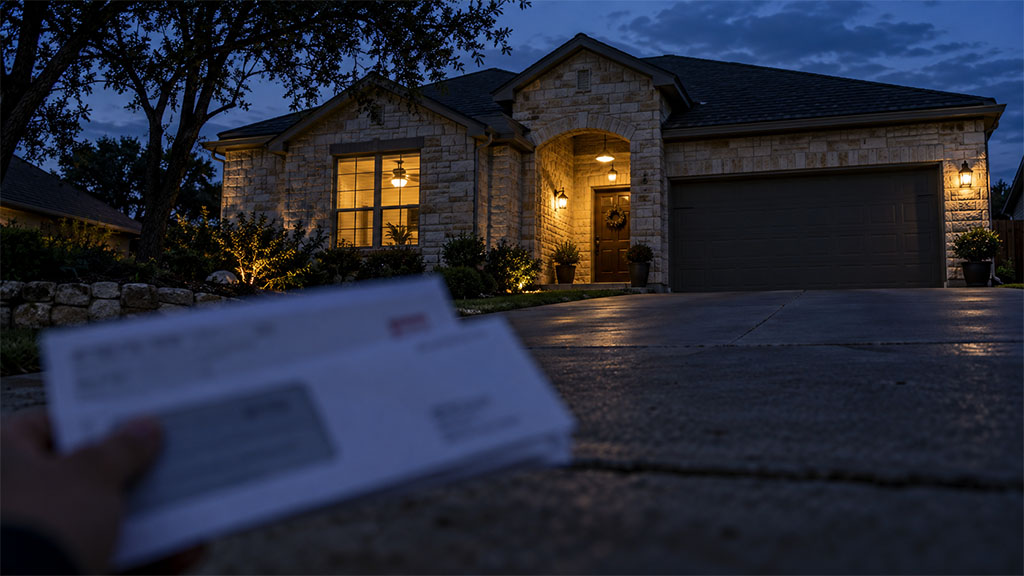
A Texas divorce decree can award the house to your ex and order your ex to pay the mortgage. It can’t take your name off the loan. The mortgage company wasn’t a party to your divorce, so if the payments stop, it can still look to you.
Your name comes off in one of a few ways: your ex refinances, the lender releases you after your ex assumes the loan, or the house sells and the loan gets paid off. Until then, your main protection is whatever your decree says about deadlines and a sale, plus a document called a deed of trust to secure assumption.
If your ex is dragging their feet on the refinance, those are the terms that decide what you can do about it.
Why the Mortgage Company Can Still Come After You
Your mortgage is a contract between the borrowers and the lender. The divorce changed the deal between you and your ex. It didn’t change the deal with the bank.
The Consumer Financial Protection Bureau says it plainly in its explanation of joint debts after divorce: divorce doesn’t automatically change your relationship with creditors, and a creditor can still collect from anyone whose name is on the loan. The Travis County Law Library’s guide to divorce and real property puts it in house terms. The mortgage company is not bound by your divorce decree.
For the spouse who moved out, that shows up in two places:
- The debt. If your ex stops paying, the lender can seek payment from you.
- Your credit. Experian notes that an ex’s late or missed payments on a joint account can show up on your credit report as well as theirs.
Federal law adds one more wrinkle. The Garn-St Germain Act bars a lender from using a due-on-sale clause to call the whole loan due when a divorce decree makes the borrower’s spouse the owner (12 U.S.C. 1701j-3(d)(7)). It covers homes with fewer than five units, and the federal regulation applies it to a home the borrower lives in. That rule lets your ex keep the existing loan. It does nothing to get you off it.
The decree decides who owns the house. The loan documents decide who owes the bank.
The Ways Your Name Actually Comes Off the Loan
Mailing the lender a copy of your decree won’t do it. The CFPB is direct about that too. The main exits are a refinance, an assumption with a release of liability, or a sale that pays the loan off.

Refinance
Your ex takes out a new loan in their name alone and uses it to pay off the joint loan. Once the old loan is paid, you’re out.
The catch is that your ex has to qualify on their own income and credit, at today’s rates. As TexasLawHelp’s divorce and real estate guide points out, a court can’t force a bank to issue a loan. A decree can order a refinance. It can’t make a lender say yes.
Assumption With a Release of Liability
Your ex takes over the existing loan, generally on its existing terms. For you, the phrase that matters is release of liability: the lender’s agreement that you’re no longer a borrower. An assumption without a release leaves you where you started.
My advice if you’re still in the divorce: call the mortgage company and ask whether the loan can be assumed. With the gap between older interest rates and current ones, lenders are letting divorcing spouses assume loans. It’s decided case by case, but when it’s on the table, it’s usually easier than a full refinance.
The lender still reviews the request. The CFPB has reported homeowners’ complaints that some servicers blocked requests to release the original borrower, even where a divorce decree called for it. Get the release in writing.
| Refinance | Assumption with release | |
|---|---|---|
| The joint loan | Paid off and closed | Stays in place with your ex as borrower |
| Interest rate | Whatever rate your ex qualifies for now | Generally the existing loan’s rate |
| Lender approval | New application and approval | Lender reviews the assumption and release request |
| When you’re off the loan | When the old loan is paid off | When the lender signs the release |
Sale and Payoff
If the house sells, the proceeds pay off the loan at closing and the debt is gone. That’s the backstop when your ex can’t refinance or assume. If the sale price won’t cover the balance, the math gets harder. That issue needs to be worked out before you agree to a sale.
What a Deed of Trust to Secure Assumption Does for the Spouse Who Left
A deed of trust to secure assumption, sometimes shortened to DTSA, is a lien on the house in your favor. Your ex signs it. It’s used when the mortgage is staying in both names, and it backs up your ex’s promise to keep paying.

According to the Travis County Law Library guide, if the mortgage isn’t paid, a DTSA gives the spouse who didn’t keep the house the opportunity to pay the mortgage and take back title to the house. Depending on how it’s written, that works like a foreclosure right on your lien.
Know its limits:
- It doesn’t bind the lender. The bank still sees two borrowers on the note.
- It doesn’t release you from the loan. Taking the house back gives you control of the asset, so it can be sold and the loan paid off.
If you’re the spouse who isn’t keeping the house, I want that document in your paperwork. If your ex doesn’t refinance or assume the loan, it’s what lets you protect your credit and keep control over your own finances instead of waiting on theirs.
Can You Force a Sale if Your Ex Won’t Refinance?
Sometimes. It depends on what your decree and your DTSA already say, not on how unfair the situation feels.
Start With the Decree’s Own Deadline
A decree can order your ex to refinance by a set date and order the house sold if they don’t. The deadline has to come from the decree itself. TexasLawHelp says the final decree should spell out how long the spouse keeping the house has to refinance. If your decree has a deadline and a sale clause, the next step is enforcing those terms. If your ex has stopped paying and you have a DTSA, the lien may give you another way to enforce the obligation.
Enforcement and Clarification in the Court That Signed It
A party affected by a Texas decree dividing property can file a suit to enforce it in the court that rendered the decree. Under Texas Family Code Section 9.006, that court can issue further orders to enforce the division, help carry it out, or clarify it, and can spell out more precisely how the division gets done.
If the decree’s wording is too vague to enforce by contempt, a clarification order under Section 9.008 can set specific terms. The court has to give your ex a reasonable time to comply with the clarified order, and the clarification only applies going forward.
What a Judge Can’t Change
An enforcement case can’t rewrite the property division. Section 9.007 bars the court from amending, modifying, altering, or changing the division made in the decree, and an order that does is unenforceable. If your decree never mentioned a refinance or a sale, don’t count on an enforcement case to add one.
Chapter 9 also sets filing deadlines for some enforcement suits. Sitting on the problem can cost you options.
Still Negotiating? Put These Terms in the Decree
If your divorce isn’t final yet, now is the time to fix the problem. Terms to raise with your attorney before you sign an agreed decree or head to trial:
- A refinance or assumption deadline. A specific date, not “as soon as possible.”
- A sale fallback. An order that the house be sold if the deadline passes without a refinance or release.
- A deed of trust to secure assumption. Signed by the spouse keeping the house, securing the promise to pay.
- The right ownership document. I want a special warranty deed, or decree language with a proper legal description that works as a muniment of title if the other side won’t sign a deed.
I steer clients away from quitclaim deeds for this, but which deed to use is its own topic. If you’re still fighting over who stays in the house while the divorce is pending, that’s a separate question from what happens after the decree. For the bigger picture, here’s how a Bexar County divorce moves from filing to final decree.
First Moves if Your Ex Is Already Missing Payments
A missed payment on a loan with your name on it is your problem now, whatever the decree says. Work through these in order:
- Read the house provisions in your decree. Look for a refinance or assumption deadline, a sale clause, and any reference to a deed of trust to secure assumption.
- Find out where the loan stands. Call the servicer and pull your credit report so you know exactly which payments were late.
- Keep a record. Save lender letters, payment dates, and your messages with your ex about the house.
- Get the paperwork reviewed before the next due date. Whether to make payments yourself, push for a sale, or file to enforce depends on what your decree and DTSA actually say.

FAQs about Staying on a Mortgage After a Texas Divorce
These come up once the house question is settled on paper but not at the bank.
Will signing a deed to my ex get my name off the mortgage?
No. A deed moves ownership of the house, and the loan is a separate contract. The CFPB notes that removing names from a title doesn’t change who owes the loan, so you stay on the note until a refinance, a release, or a payoff.
How long does my ex have to refinance after a Texas divorce?
As long as your decree gives them. That’s why the decree should state a specific deadline. If yours doesn’t, have a lawyer look at whether the existing language can be clarified, since a court can’t add new substantive terms after the fact.
Can my ex be held in contempt for not refinancing?
Not automatically. Contempt needs an order specific enough to enforce that way, and Texas limits contempt for decree awards payable as a debt under Section 9.012. Whether it’s available turns on exactly what your decree orders.
Should I make the payments myself to protect my credit?
You’re still a borrower, so you can pay, and a DTSA is meant to give you that option. Whether you can get that money back or take the house back depends on your decree and DTSA terms. Get them reviewed before you start covering someone else’s mortgage.
Get a Plan Before Your Ex’s Mortgage Becomes Your Credit Problem
Every month your name stays on a loan you don’t control, your credit rides on someone else’s payment history. Brandi Wolfe Law’s San Antonio property division team reviews decrees for what the refinance, sale, and deed of trust terms actually require, and brings enforcement or clarification cases in Bexar County when an ex won’t follow through. If your divorce is still open, we push to get those protections into the decree before you sign.
Call Brandi Wolfe Law, PLLC at (210) 571-0400 or talk to a San Antonio divorce attorney about getting your name off a loan on a house you no longer own.