

Yes. A custody order doesn’t expire because nobody’s been following it. Maybe your teenager stopped going to the other parent’s house, or the two of you worked out your own schedule and it’s been fine for months. None of that changes the order on file. The other parent can still file an enforcement, and the court will look at what the order says. Brandi’s version is short: “your order is your order.” If the arrangement you’re living under is the one you both want, the fix is to make it official.
Why an Informal Agreement Doesn’t Replace the Order
A standard possession order lets parents agree to their own schedule, up to a point. Texas law requires it to include language allowing possession at times the parents mutually agree to in advance. Without that agreement, the schedule in the order controls. If your order is a custom one, check whether it has the same language.
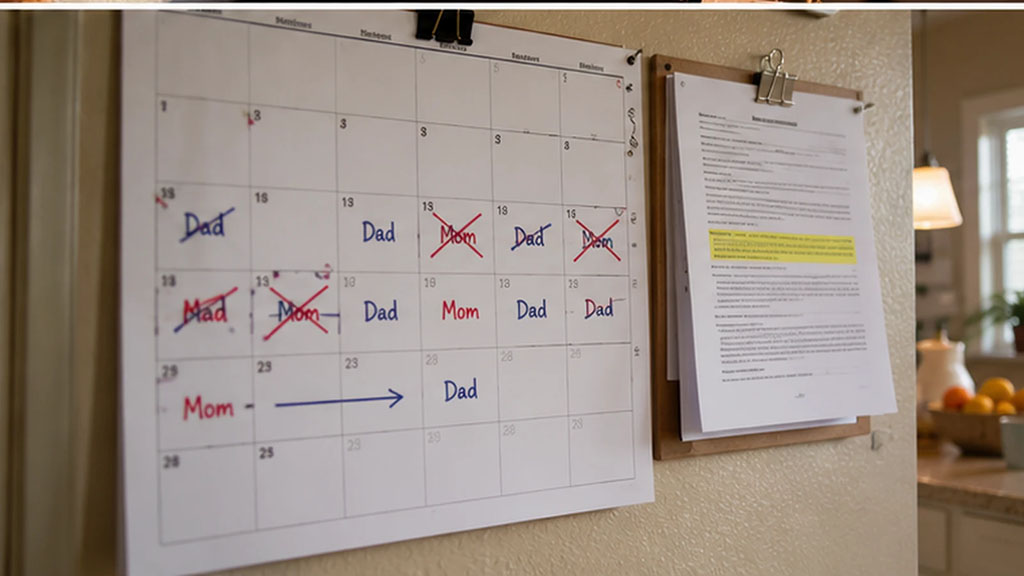
That’s the catch. An agreement works only as long as both of you keep agreeing. The day one parent changes their mind, you’re back to the written order, and a handshake deal from last spring won’t protect you going forward. Even a written parenting plan doesn’t become enforceable on its own. Under Family Code section 153.007, the terms are enforceable once the court puts them in an order, and the plan isn’t enforceable as a contract.
Brandi put it this way: “when things get tough and you two are fighting and you can’t come to an agreement, the order controls.”
How Long Can Your Ex Wait to File?
Longer than you might think. For possession and access, a court keeps the power to hold someone in contempt as long as the enforcement motion is filed within six months after the child becomes an adult or the possession right ends, under Family Code section 157.004.
So a year of not following the order doesn’t protect you. As Brandi says, “Your order can still be enforced even a year after not following it.” The other parent doesn’t have to file the first weekend something goes wrong.
What If the Other Parent Agreed to the Change?
That can matter, but it isn’t a blanket pass. Texas gives a parent accused of contempt for a possession violation a specific defense: the parent who filed the enforcement voluntarily gave up possession of the child. Under section 157.007, that defense only covers the same period of time the violation allegedly happened.
In practical terms, a text from your ex saying “keep him this weekend, I can’t take him” can help for that weekend. It doesn’t erase every other weekend. You’d still have to prove the defense, which is why texts about schedule changes are worth saving.
When Your Teenager Is the One Saying No
Here’s one way it happens. A 15- or 16-year-old decides they’re done going to the other parent’s house, and the parents stop fighting about it. The order still says what it says.
The teen’s wishes can change the order only through a modification, and any change has to be in the child’s best interest. If the teen wants the other parent to decide where they live, a child 12 or older telling the judge that in chambers is one of the grounds for a modification under section 156.101. What a teenager tells you at the kitchen table isn’t that process.
For orders that need to account for older kids from the start, read how a maturity clause works for teen visitation.
Teens Who Drive Themselves
Once a teenager has a car, exchanges get fuzzy. Brandi calls it “a murky area.” The order doesn’t stop applying because the child holds the keys. If your teen is driving to exchanges, both parents and the teen need to be clear on who is responsible for getting them there, and the order should probably say so.
Club Sports, Practices, and the Other Parent’s Weekend
Extracurriculars are another source of off-order schedules. The travel team practices Saturday morning, and Saturday is your ex’s weekend. Who decides?

Unless your order says otherwise, the parent who has the child during that period is responsible for the child’s care and supervision, under Family Code section 153.074. Brandi’s answer for a parent who doesn’t want to drive the kid to practice on their own time is direct: “they do not have to.” If your order doesn’t address activities, that’s a reason to modify it, and a reason to get it right when you’re drafting a new order.
How to Make the New Arrangement Official
When you both want to keep the schedule you’re living under, the fix is a modification that puts it in an order. When the parents agree, Texas allows them to submit an agreed plan, and the court has to render an order following it if it finds the plan is in the child’s best interest, under section 153.007. With an agreed modification, the court isn’t being asked to choose between two stories.
If you don’t agree, you’re looking at a contested modification, and you’ll need to prove one of the statutory grounds plus best interest. Either way, the goal is the same. Get the order to match real life so nobody is one bad week away from an enforcement.
For the legal standard in more detail, read how to modify a custody order in Texas.
FAQs about Not Following a Custody Order in Texas
Here are a few follow-up questions parents ask about off-order schedules.
Can my ex suddenly demand the original schedule back?
Yes. Without an agreement, the order’s schedule controls, so a parent who wants to go back to the written order can. Arguing that you’ve done it differently for a year won’t change what the order says.
Doesn’t a 12-year-old get to pick where they live?
Not exactly. Under Family Code section 153.009, in a nonjury hearing the judge has to interview a child 12 or older in chambers if a party asks, but the interview doesn’t take away the court’s job of deciding what’s in the child’s best interest. Brandi’s summary: “It’s not a guarantee that the kid is gonna be able to get what they want.”
Does it matter if my ex agreed to skip weekends?
It can, for specific weekends. The voluntary-relinquishment defense in section 157.007 is tied to the exact period at issue, so the details of who agreed to what, and when, matter.
Living Under a Schedule That Isn’t in Your Order?
Your arrangement might be working fine right now. That’s the best time to make it official, before anyone is angry enough to file an enforcement. Brandi Wolfe Law helps San Antonio parents turn the schedule they’re actually living into an order that protects both of them. Call (210) 571-0400 or book a free consultation to talk about a custody modification in San Antonio.