
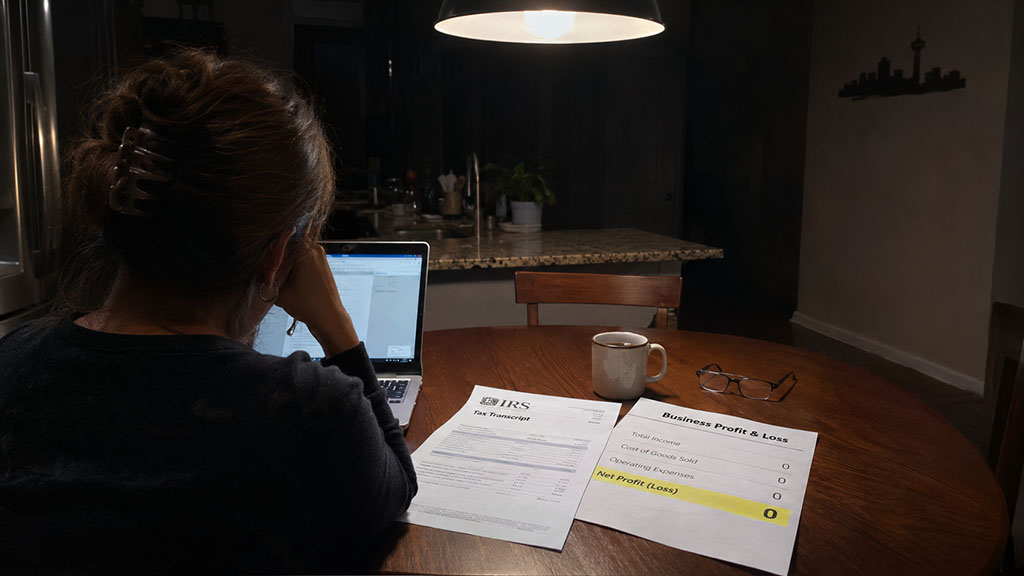
A business that made money for years and then shows nothing right after a divorce filing isn’t proof of anything by itself. It’s a reason to look. Texas presumes that property either spouse has during the marriage is community property, and a weak profit-and-loss statement doesn’t settle what a company is worth. What you can do right now is gather the records you’re lawfully allowed to see and write down when things changed, so the person who eventually reads those books has something real to work with.
Is Your Spouse’s Business Partly Yours?
It might be, even if you never worked there. Under the Texas Family Code’s community property presumption, property either spouse has during the marriage is presumed to be community. The spouse who says the business is separate property has to prove it by clear and convincing evidence. That’s a high standard.
Start with timing. Separate property includes what a spouse owned before the marriage, so a company that existed before the wedding starts from a different place than one started afterward. For a business started during the marriage, Brandi doesn’t soften it: “there’s going to be a community element to your business.” That’s the starting presumption. Your spouse can try to rebut it. They’d need clear and convincing evidence.
Whose name is on the paperwork doesn’t decide the question, and neither does which of you ran the place day to day while the other worked a different job or stayed home with the kids.
Why a Business Can Look Worthless on Paper
Bookkeeping is full of judgment calls, and some of them get made with a divorce in mind. Asked whether a business that looks worth zero on the books right after a filing is a coincidence, Brandi’s answer was blunt: “I don’t know. We’re going to have to deep dive those books.”
A close review of the records can start with questions like these:
- Did the owner’s salary or draws go up while reported profit went down?
- Is the company now paying personal costs like a truck or a phone?
- Did invoices or customer payments get pushed past the filing date?
- Did money start landing in accounts you haven’t seen before?
- Are relatives or brand-new “contractors” suddenly getting paid?

None of these proves anything on its own, but together they show an expert where to start.
What You Can Pull Right Now
Start with tax records. For joint returns, the IRS can release a transcript to either spouse, and its short request form says only one signature is required. You can request transcripts through your IRS online account or by mail. They show what was reported to the government year by year, which gives you a baseline to compare against what the business claims today.
Next, save copies of the joint bank and credit card statements you already receive. Put them somewhere only you can open. Loan paperwork is worth a look, since a business that wanted financing last year may have described its income very differently than it does now.
Then write a short timeline showing when you filed and when the profits dropped. Did your spouse start complaining about how bad business is around the same time? Note that too. Dates turn a suspicion into something an attorney can use.
Only use access you already legitimately have. Texas makes it an offense to knowingly access a computer system without the owner’s effective consent, and a password you guessed or remembered isn’t permission. Ask your attorney before you log into anything.
What Your Attorney Can Get Through the Case
Once your spouse answers the divorce petition, some records have to be turned over without anyone asking. Under Texas Rule of Civil Procedure 194.2, each side in a divorce has to hand over certain records without waiting to be asked, though some cases, including ones involving family violence, can be exempt. That includes retirement plan statements and statements for accounts at financial institutions such as banks and brokerage firms. The look-back is two years, or the length of the marriage if that’s shorter. The deadline is 30 days after the first answer or appearance is filed unless an agreement or court order sets another date.
The company’s own books and tax returns come through formal discovery requests. Records held by outsiders, such as the business’s accountant, can be pursued too.
When You Need a Forensic Accountant
A forensic accountant traces where money went and whether the reported numbers hold up, while a business valuation expert puts a dollar figure on the company itself, which is the kind of figure a court uses in the property division. Sometimes it’s one person doing both. Neither one is cheap. Spouses can also agree on a value without paying for a full valuation, but don’t agree to anything until you’ve seen enough records to know what you’d be giving up.

How Texas Courts Look at a Business’s Value
As Brandi puts it, “value isn’t just what’s on the books.” A valuation looks past the bottom line to what the company actually earns and owes and where it’s headed.
Goodwill is where it gets technical. Texas courts treat two kinds differently. Personal goodwill is value that comes from a professional’s personal skill and reputation, and it isn’t divided in a divorce. That rule goes back to Nail v. Nail, as a later Texas appellate opinion explains, and it was developed for professional practices like medical offices. Goodwill that exists apart from the owner and has its own commercial value can be. If the whole business would walk out the door with your spouse, expect that argument to come up.
What If Money Was Moved Out Before or After Filing?
Draining or hiding community money can amount to what Texas law calls fraud on the community. If the court finds it happened, it figures out how much the community estate was depleted, adds that amount back in on paper, and divides the larger reconstituted estate. Under Family Code section 7.009, the court can grant relief including a larger share of what’s left, a money judgment, or both.
That’s why the timeline matters. The court adds back what the evidence shows was depleted. If you think cash is involved, read what happens when a spouse hides cash before a Texas divorce.
Does the Business Have to Be Sold?
Not automatically. Texas courts divide the marital estate in a way they consider just and right. One spouse can keep the company while the other takes more of the other assets. If the business is worth more than everything else combined, a payout over time is one way to settle it.
The owner wants to keep the company and you want an honest number, and both are possible once the books have been tested by someone who isn’t on the owner’s payroll.
Mistakes That Make This Harder
A few moves can set your own side back.
- Logging into accounts you weren’t given access to can turn your case into a case about you.
- Accepting a value from your spouse’s accountant means trusting someone the business pays.
- Waiting until mediation to ask questions leaves little time to get records and have them analyzed.
- Deleting texts about money, even ones you think hurt you, is a mistake. Read what deleting texts can mean in a Texas divorce.
For more on hidden assets in general, see what happens if your spouse hides money during a Texas divorce. If you’re the owner, read what small business owners should know about divorce.
FAQs about a Spouse’s Business in a Texas Divorce
Here are a few more questions about business income and value.
Can a business that shows no profit still affect child support?
Yes, it can. Texas calculates self-employment income after the ordinary and necessary costs of running the business, and under Family Code section 154.065 a court can refuse to count depreciation, tax credits, or other write-offs when the evidence shows they’re inappropriate for figuring support. A zero on the tax return isn’t the end of that conversation.
What if the business was started before we got married?
Then your spouse has a stronger separate property argument, but they still have to prove it with clear and convincing evidence.
Do we have to pay for a business valuation?
Not always. Spouses can agree on a value. If one of you thinks the books are wrong, an outside expert can test them.
Want Someone to Read Those Books With You?
The business only looked worthless after the petition was filed? That timing deserves real questions. Brandi Wolfe Law helps San Antonio spouses get the records, bring in the right financial experts, and test the numbers before anyone signs off on a value. Call (210) 571-0400 or schedule a free consultation about your property division case.