

Leaving the Military to Dodge Divorce Obligations: What Texas Law Says
Is He Trying to Walk Away From His Support Obligations?
You’re not being dramatic. When a man says he’s going to leave the military “so you can’t take his money,” that’s not just frustrating – it’s terrifying. And for many military spouses, it feels like a threat you can’t stop.
The truth is, this kind of manipulation happens more often than people realize. A service member facing divorce or a support hearing may suddenly start talking about retiring early, switching careers, or “getting out” to reduce his income.
But here’s what he’s probably not telling you: Texas courts don’t reward this behavior.
Support isn’t based on what he decides to earn – it’s based on what he’s capable of earning. Judges know when someone is trying to game the system, and they have the legal tools to hold him accountable.
This article will help you understand exactly how support is calculated in military divorce – and what happens when your husband tries to walk away from his financial responsibilities.
You don’t have to accept the threat. And you don’t have to be silent while he tries to make himself judgment-proof.
Can He Quit the Military to Avoid Paying Support?
It’s a question that keeps women up at night – especially when the threats start:
“I’ll get out before you take a dime.”
“Once I’m out, the court can’t touch me.”
But here’s the reality: yes, he can leave the military – but no, that doesn’t erase his obligation.
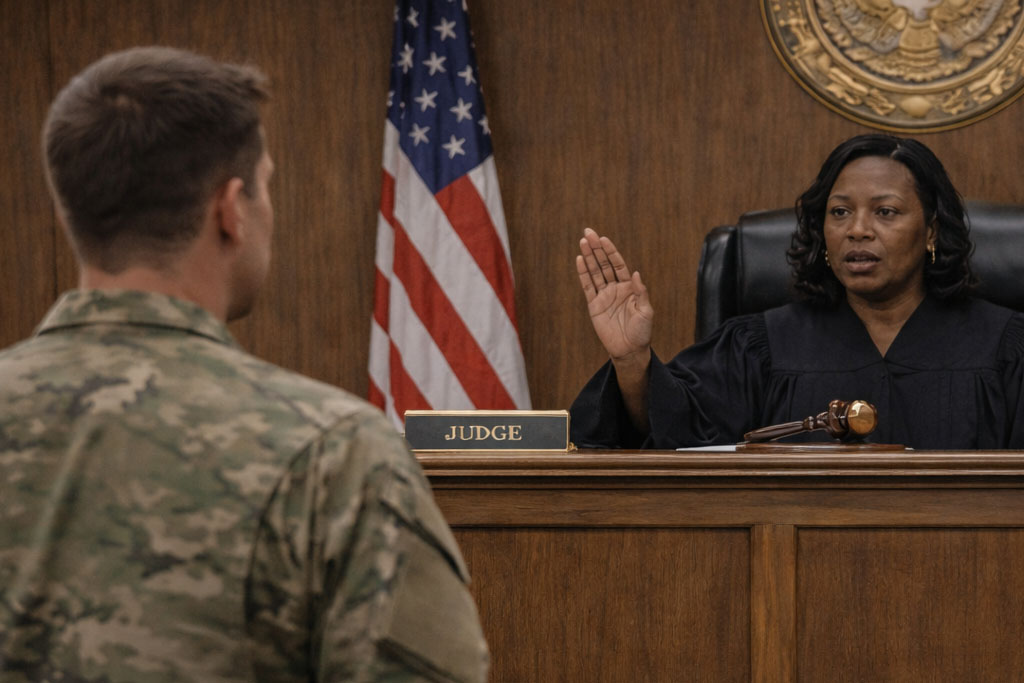
While most active-duty service members can’t just “quit,” there are legitimate ways to separate or retire – especially if they’re nearing the end of a contract. But the timing and intent matter more than the decision itself.
If your husband starts planning his exit right when child support or spousal support orders are being decided, the court will look closely at whether it’s a career decision or an avoidance tactic.
Texas judges know the difference.
And support doesn’t disappear just because the paycheck changes.
Even if he’s no longer earning a military salary, his responsibility doesn’t vanish. Judges look at what he should be earning, not what he claims he can’t pay. That means support can still be calculated – and enforced – even after he separates from the service.
If he’s trying to time his discharge to avoid accountability, it may end up working against him in court.
How Texas Courts Handle Voluntary Career Changes
If your husband chooses to leave the military during or after divorce, that’s his decision. But he doesn’t get to choose whether or not to support his children – or you, if spousal support is in place.
Texas law protects families from this kind of financial manipulation. Under Texas Family Code §154.066, the court can impute income – meaning the judge can base support on what your husband should be earning, even if he claims he no longer has the income to pay.
This applies when someone is:
- Voluntarily unemployed
- Working below their skill level on purpose
- Leaving a stable job to reduce support
- “Job-hopping” to avoid wage garnishment or court orders
Judges are not fooled by sudden career changes that conveniently line up with support hearings.
Instead, they’ll look at:
- His work history
- Military rank and total compensation
- Education and transferable skills
- Earning capacity in the civilian workforce
- The timing and reason for the job change
If it looks like he’s trying to lower or eliminate payments by walking away from military pay, the court can ignore the income drop entirely and order support based on his earning potential.
In short: choosing to earn less doesn’t mean paying less. You don’t have to accept his resignation as the end of your financial security. Texas courts won’t either.
How Judges Calculate Child Support Using Military Pay
Military pay isn’t just one number – and the courts know it.
If your husband is on active duty, his income includes more than just his base salary. That’s why Texas courts use his LES (Leave and Earnings Statement) – not just a pay stub – to calculate child support. Judges understand how military pay works, and they make sure all income is accounted for.
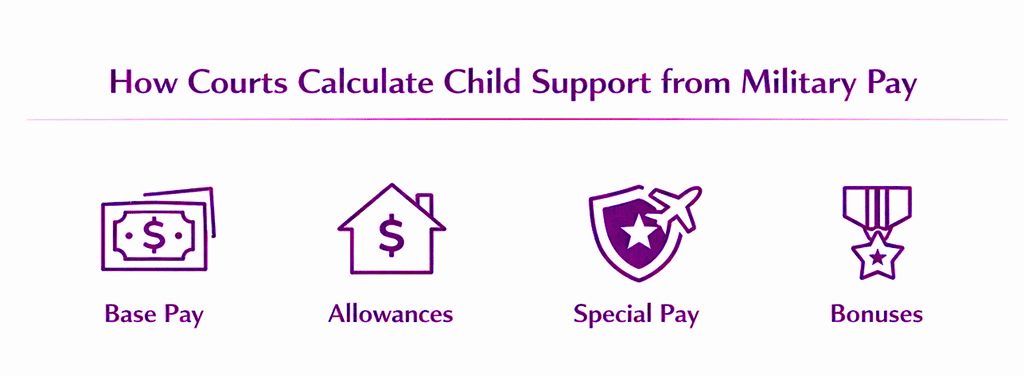
Here’s what typically counts as income in a Texas child support case:
1. Base Pay
The fixed monthly salary based on rank and time in service.
2. BAH (Basic Allowance for Housing)
Even if his housing is provided, this non-taxable benefit is treated like income.
3. BAS (Basic Allowance for Subsistence)
A food allowance – also non-taxable but counted toward support.
4. Special and Incentive Pay
Including flight pay, hazard pay, sea pay, deployment bonuses, etc.
5. Bonuses
Retention or re-enlistment bonuses are often averaged over time to reflect real income.
6. Other Military Benefits
Some allowances – like COLA (Cost of Living Adjustments) in overseas duty – may also be considered.
Support is based on gross monthly income, not net. And while some of this income isn’t taxed, it’s still part of what supports your children – so it’s factored into what he owes.
If he leaves the military, courts can still look at what he was earning through these sources – especially if he walks away without a plan and tries to say he “can’t afford” support anymore.
Support calculations aren’t built on excuses – they’re built on accountability.
What Happens If He Tries to Reduce Income On Purpose
This is one of the most common – and frustrating – tactics in military divorce: a spouse suddenly changes jobs, “takes a break” from working, or retires early just when support is about to be decided.
The goal? To make it look like he can’t afford to pay.
But Texas law sees through it.
When someone voluntarily reduces their income, courts call it voluntary underemployment or voluntary unemployment. And judges have the authority to respond by imputing income – calculating support based on what that person should be earning, not what they say they make now.
Common red flags include:
- Leaving the military early without a plan
- Taking a much lower-paying job with no explanation
- Claiming disability or VA status without documentation
- Refusing to look for work after separation
- Dragging out a “career change” to stall the case
If any of this is happening in your situation, you’re not being paranoid. Judges know these patterns – and they’re allowed to act on them.
When courts impute income, they use:
- Past earnings (including military pay and allowances)
- Rank and qualifications
- Civilian earning potential
- Industry standards for similar work
Even if he says, “I don’t have a job anymore,” the court can still say, “You’re capable of earning $6,500/month – and that’s what support will be based on.”
Trying to manipulate income doesn’t make support go away. It just gives the court a clearer reason to enforce it – harder.
Can You Still Enforce Support After He Leaves the Service?
Absolutely – and in many cases, enforcement becomes even more critical after separation.
Whether your husband retires, switches to a civilian job, or stops working altogether, he is still legally responsible for paying court-ordered child support or spousal support.
Texas offers multiple tools to enforce those orders, even after a service member is no longer in uniform.
Here’s how enforcement works after he’s out:
Wage Garnishment
If he starts a civilian job, you can have support automatically withheld from his paycheck – just like the military did.
Military Retirement Withholding
If he receives retirement through the Defense Finance and Accounting Service (DFAS), you may be entitled to a portion through a wage withholding order or Qualified Domestic Relations Order (QDRO).
Enforcement Through the Attorney General
Texas allows the Office of the Attorney General (OAG) to enforce unpaid support. They can:
- Seize tax refunds
- Place liens on property or accounts
- Suspend driver’s and professional licenses
- File contempt actions in court
VA Disability and Other Benefits
Some types of VA pay are protected, but others can be considered for support. If your husband is receiving benefits after discharge, the court may still factor them into support – or use them as evidence of ability to pay.
Support doesn’t end when his military career does. The legal system stays with him – and if he stops paying, there are clear ways to hold him accountable.
If he thinks leaving the military makes him untouchable, he’s wrong – and the court knows it.
FAQs About Quitting the Military and Support Obligations
Can he use disability or VA benefits to reduce support?
It depends. VA disability payments are sometimes protected from division, but courts can still consider them when calculating support – especially if they’re his main or only source of income. He can’t claim poverty while collecting substantial benefits.
Will the court know when he leaves the military?
Not automatically. That’s why it’s smart to ask the court to require notification of any employment or income changes. You can also ask for updates to be provided regularly, especially during active divorce proceedings.
Can the judge base support on his military pay even after he’s separated?
Yes – if the court finds that he left the service voluntarily to avoid paying. In that case, the judge may “impute” his prior income and calculate support as if he were still earning it.
What if he refuses to get a new job after leaving the military?
The court can still assign income based on what he’s capable of earning. Sitting out of the workforce isn’t a legal excuse to avoid responsibility.
Can military retirement be garnished for support?
Yes. If retirement is part of the divorce settlement or used for ongoing support, DFAS can withhold a portion directly. You must request it formally through a court order.
Does early retirement reduce his child support?
Not automatically. If the retirement is voluntary and done to lower payments, the judge can ignore the income drop and calculate support based on what he would have earned if he’d stayed.
What if he tells me he “won’t pay a dime”?
That’s contempt. If he defies a court order, you can file an enforcement motion. Judges can impose serious consequences – including fines, liens, or jail time – for failure to pay.
You Don’t Have to Let Him Walk Away
If your husband is threatening to leave the military just to avoid supporting you or your children, don’t let fear keep you stuck. You are not powerless – and the court does not reward financial manipulation.
Whether he’s separating soon or already out, Brandi Wolfe Law can help you hold the line. We understand how Texas courts handle military support cases – and how to protect your rights when your future is on the line.
Call (210) 571-0400 to schedule a confidential consultation and get a plan that works – even if he’s trying to run from responsibility.